


Maintenance Gets Sold as a Comfort Service. It's an Air Quality Service Too.
Ask most homeowners why they schedule an AC tune-up and the answer is usually comfort: keep the system running, avoid a breakdown in August, get the most out of the equipment. That's true, but it misses half the point. A neglected system doesn't just cool less efficiently. It filters less effectively, circulates more dust, and gives mold and moisture more room to settle in before anyone notices. In Mar Vista, where the marine layer's daily swing puts its own kind of stress on a system, skipped maintenance shows up in your air before it shows up as a full breakdown.
The Coil Is Doing More Than Cooling
Your AC's indoor coil does two things at once: it cools the air, and it condenses moisture out of it. A coil coated in dust doesn't do either job well. Reduced heat transfer means the system runs longer to hit the same temperature. Reduced moisture removal means more humidity stays in circulation, which matters in a climate where the marine layer already keeps mornings damp. A dirty coil also gives that trapped moisture somewhere to sit, and a damp, dusty coil is close to ideal conditions for microbial growth inside equipment that's supposed to be cleaning your air, not adding to what's in it.

Why the Filter Matters More Than the Schedule on the Box
Most filter packaging suggests a one-to-three-month replacement window, but that assumes a steady run pattern. Mar Vista doesn't have one. The marine layer keeps the system light through cool, overcast mornings, then the afternoon heat once it burns off can push hard runtime for hours. A filter loads up based on actual airflow through it, not the calendar. We recommend checking it monthly through the active season, roughly June through October here, and judging by condition rather than a fixed date. During wildfire smoke season, a single heavy day can load a filter faster than a normal week would.
Contactor Wear Ties Back to Cycling, Not Just Age
The marine layer's daily pattern, idle through a cool morning, then a hard start once the afternoon heat sets in, wears out contactors faster than steady runtime would. Contactors are the electrical switches that engage the compressor and outdoor fan, and frequent hard starts pit and wear them down ahead of schedule. A worn contactor doesn't just risk a breakdown. A system struggling through inconsistent starts often runs less efficiently through each cycle, which means less time actually pulling moisture and particulate out of circulation before the compressor shuts back off.
What a Tune-Up Actually Checks
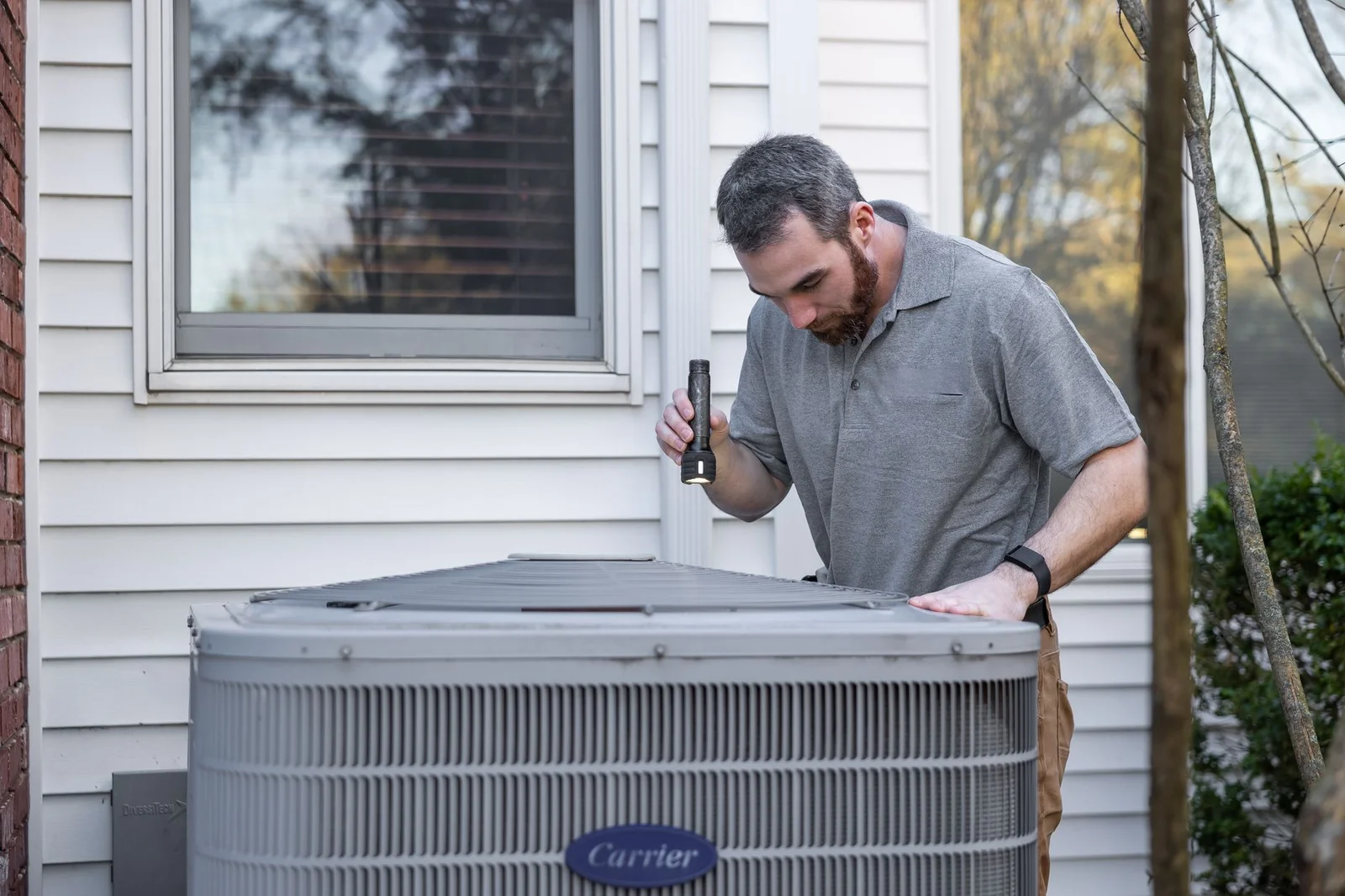
A proper tune-up goes past a quick coil rinse. We check refrigerant charge against manufacturer spec, since a low charge makes the system work harder and reduces its ability to properly dehumidify the air as it cools it. We inspect capacitors and contactors given how much cycling stress the marine layer pattern puts on them. We take a static pressure reading on your ductwork, since duct performance changes as connections loosen and insulation settles over time, and restricted or leaking ductwork undermines whatever filtration you've got upstream. We check thermostat calibration too, which matters more if you're using scheduled pre-cooling to work with the marine layer pattern rather than fighting it.
Timing It Around Your Actual Climate
Because Mar Vista's moderate climate means systems here run fewer total hours annually than systems further inland, it's tempting to think maintenance matters less. It's the opposite. A system that sits mostly idle through cooler months, then gets switched on hard once the afternoon heat pattern sets in for the season, is exactly the kind of system that benefits from a check before that pattern starts. We recommend scheduling in April or May, ahead of the daily burn-off pattern driving heavier afternoon use, and well ahead of wildfire smoke season later in the year.
What Skipping It Does to Your Air, Specifically
Skipping maintenance rarely causes an immediate failure. What it causes is a slow decline: a coil losing efficiency, a filter loading past the point of catching fine particulate, a contactor wearing toward failure, and ductwork losing static pressure as connections loosen. None of that shows up as an obvious symptom right away. It shows up as air that feels a little more stale, dust that seems to resettle faster after cleaning, and a system that's less prepared for whatever the next smoke event asks of it.
Homes Closer to the Coastal Edge
Mar Vista and neighboring Venice homes sitting closer to the coast see a mild version of salt-laden air reaching a few miles inland on windier days. It's not heavy corrosion, but it's enough that we check electrical connections and coil fins for early wear during maintenance visits in that stretch, since corrosion on a contactor or coil fin speeds up the same efficiency and air quality decline described above.
Keeping Vents Clear Between Visits
A tune-up only covers what's inside the equipment and the ductwork. Between visits, blocked vents do their own quiet damage to air quality. Furniture pushed against a return grille, a rug covering a floor register, curtains draped over a supply vent, all of these restrict the airflow your system needs to actually move filtered air through the room. A partially blocked return also makes the blower pull harder to compensate, which can strain a system that's already working against undersized ductwork common in Mar Vista's older homes. Walking the house every so often to check that vents and returns are clear costs nothing and helps the filtration you're already paying for actually do its job.
Duct Sealing Belongs in the Annual Visit
A tune-up that only touches the equipment and skips the ductwork misses part of the picture. We check accessible duct connections for gaps and loose joints during the annual visit itself, rather than treating that as a separate service you have to book on its own. Catching a joint that's starting to loosen during a routine check costs far less than waiting for it to become the kind of leak that shows up later as a musty smell or a room that never quite cools right.
Pairing Maintenance With a Smart Thermostat
A properly calibrated thermostat makes the rest of a maintenance plan more effective. If you're using scheduled pre-cooling to work with the marine layer's daily swing, a thermostat that's out of calibration undercuts that strategy before it starts. We check calibration during every tune-up, and for households without a smart thermostat yet, installing one alongside a maintenance visit adds the scheduling flexibility to pre-cool ahead of the afternoon heat instead of reacting to it once the house has already warmed up.
Schedule It Before the Pattern Demands It
Stale, dusty-feeling air in a Mar Vista home is often the first sign that maintenance has fallen behind, well before the system shows any obvious mechanical symptom. Call Mar Vista AirCon at (877) 552-7520 if it's been a while since your last visit. We work throughout Mar Vista, Palms, and Venice, checking coil, filter, ductwork, and thermostat as one pass, ahead of whatever the next heat spell or smoke event brings.
Need Professional HVAC Service?
Our HVAC-experienced technicians are ready to help with all your AC and heating needs. Contact Mar Vista AirCon today for expert service throughout the West LA service area.


